Specification tables are easy to skim and easy to misread. Here is what the common rows actually tell you, and where buyers most often draw the wrong conclusion.
Thickness (micron)
Total thickness: backing plus adhesive. It is the number most often used as a proxy for quality, and it is a poor one on its own, because a thick backing with a thin adhesive layer and a thin backing with a generous one can both read 50 micron.
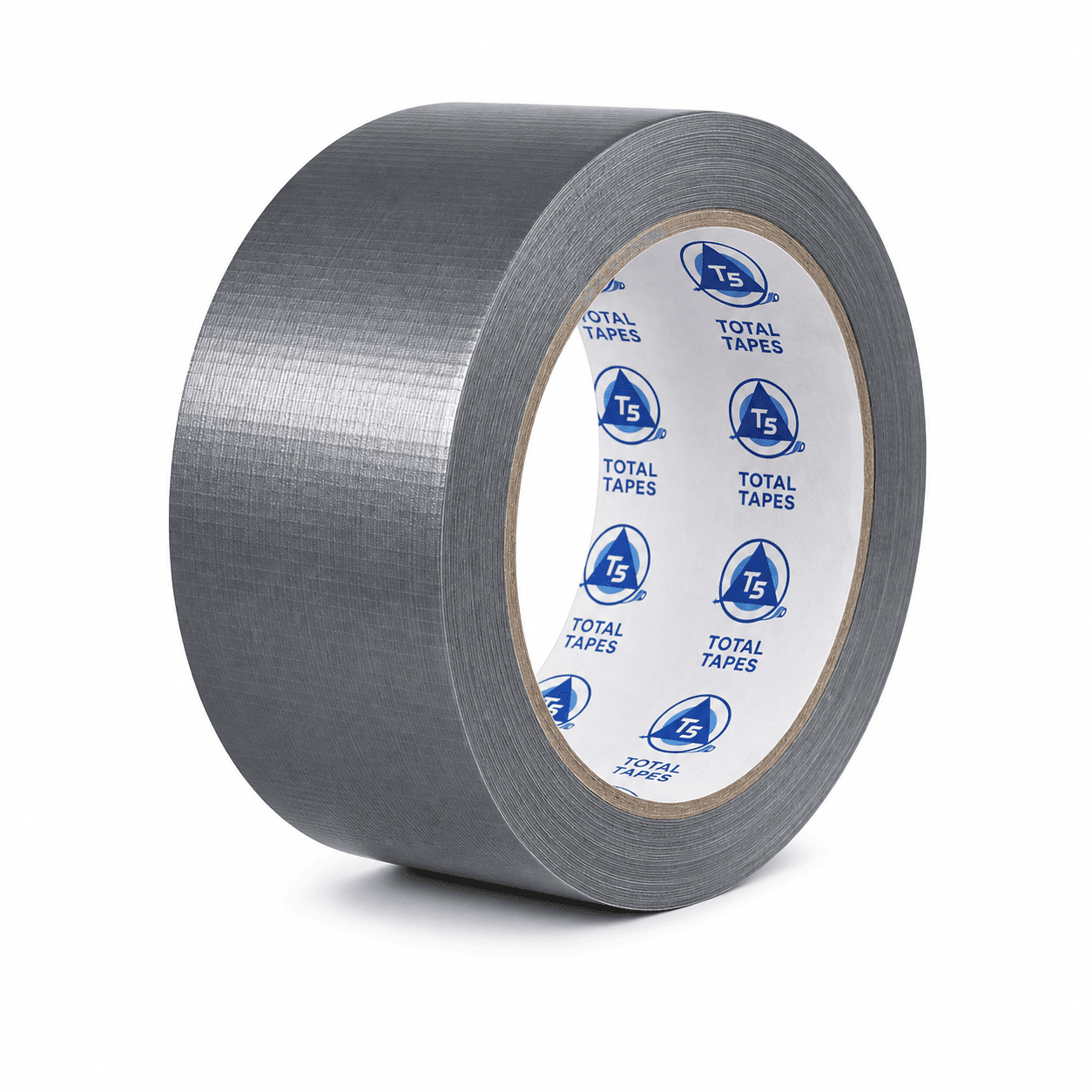
Where it genuinely matters is conformability and strength. Our duct tape runs 150–260 micron because it needs to bridge gaps and tear by hand; polyimide tape runs 60 or 80 micron because it has to sit under a soldering mask without adding bulk. Thicker is not better, it is different.
Tensile strength
How much pull the tape takes along its length before it breaks. This only matters when the tape is carrying load — bundling, palletising, strapping a pipe. For sealing a carton, tensile strength is almost irrelevant; the adhesive gives way long before the backing does.
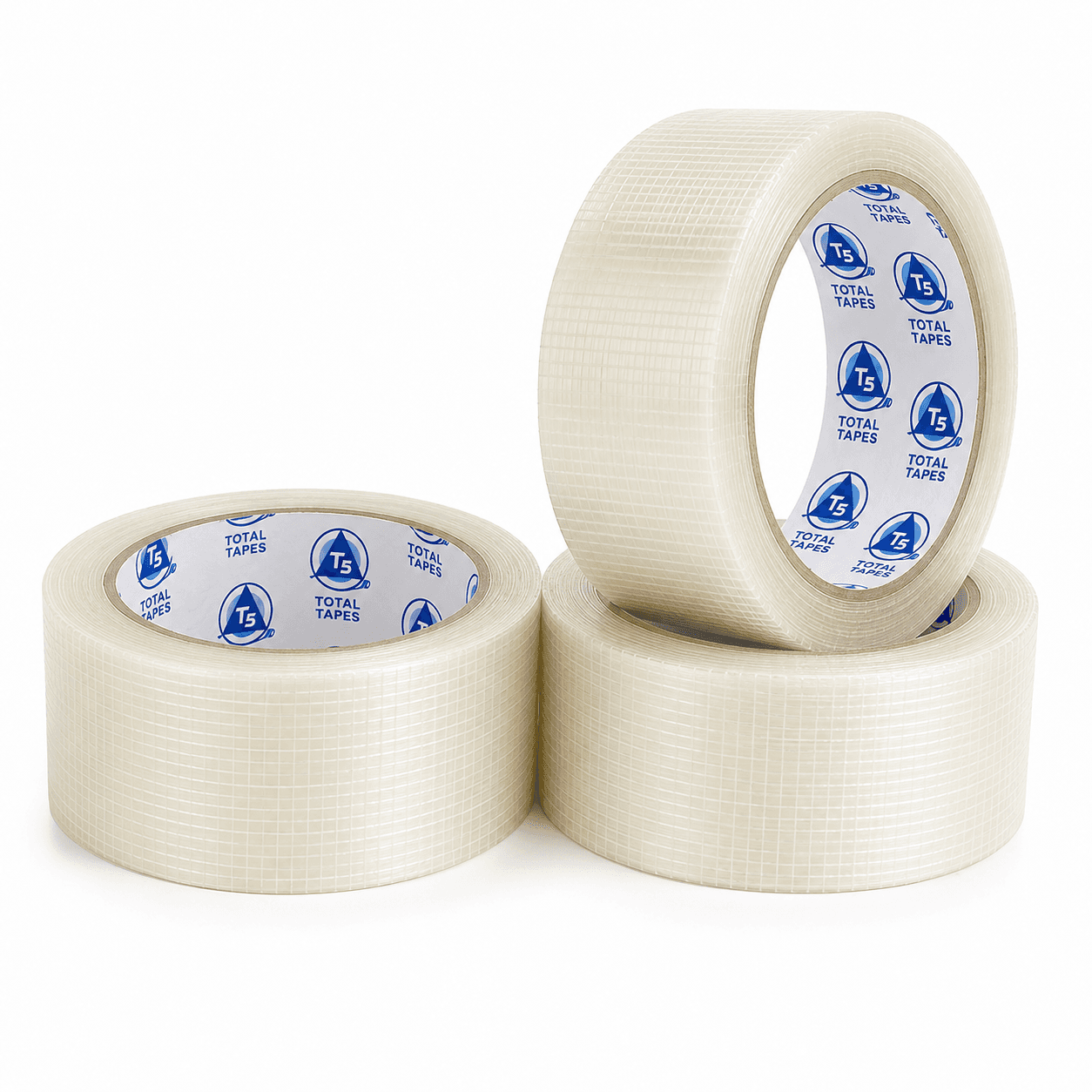
Where it matters a great deal is reinforced tape. Cross filament tape is rated very high tensile not because of the PP film but because of the cross-weave fibreglass filaments running through it. That is also why it resists being split across its width, which a plain film tape will do the moment it is nicked.
Temperature resistance
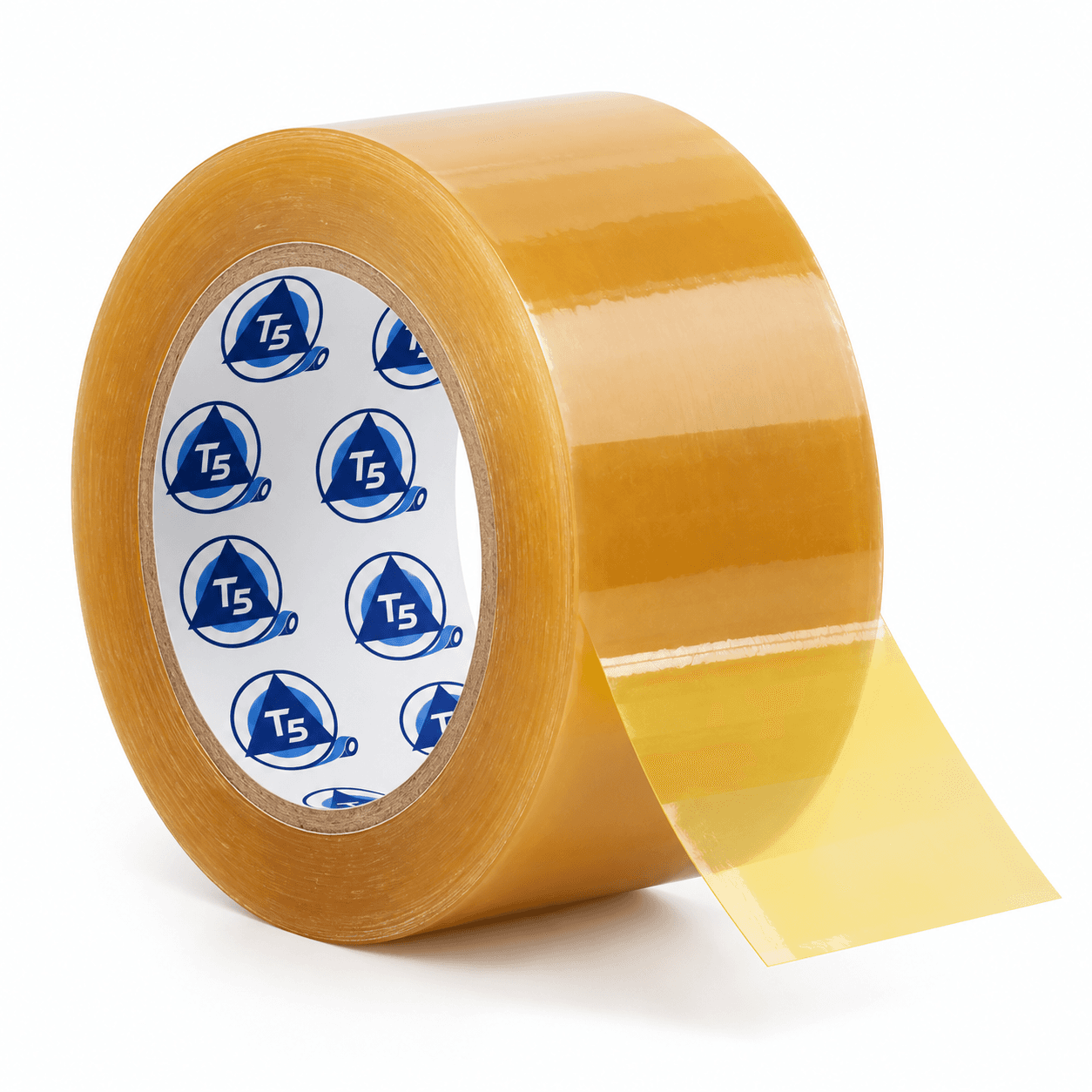
Read this as a service range, not a survival range. Transparent BOPP tape is rated −5°C to +50°C; cross filament −10°C to +60°C; VHB −30°C to +120°C. Outside the range, the tape does not vanish — it stops behaving predictably. Adhesive softens and creeps at the top end, and goes hard and loses tack at the bottom.
The trap is application temperature versus service temperature. A tape applied at 5°C may never build proper bond even if its service range extends well below that, because the adhesive was too stiff to wet the surface in the first place.
Mesh and reinforcement
On drywall mesh tape, the mesh is the product — a cross-woven fibreglass grid that lets joint compound pass through and key into the board on both sides. On cross filament tape, the filaments are embedded under the adhesive and do nothing except resist pull. Same word on a spec sheet, completely different job.
Shelf life
Our tapes are rated up to 12 months, and that figure assumes sane storage: cool, dry, out of direct sun, rolls stored on their side rather than on the edge. A roll kept on a hot shelf next to a window is not getting 12 months, whatever the sheet says.
What is often missing — and worth asking for
- Peel adhesion on your actual substrate, not on steel
- Core diameter, if your dispenser is fussy about it
- Whether the width tolerance matters for an automatic head
- Elongation at break, if the tape has to conform around a curve
Specs are a starting point
A sheet tells you how the tape behaved in a lab. Your surface, line speed and storage decide how it behaves for you. Ask for a sample and test it where it will actually live.
Ask on WhatsApp →